Brake Pads vs. Rotors: What *Actually* Needs Replacing in Philadelphia?
Hearing a screech, grind, or just feeling less confident in your car's stopping power? Your brakes are trying to tell you something. When it comes to brake service, many car owners in Northeast Philadelphia, Willow Grove, and surrounding areas often hear terms like "brake pads" and "rotors" thrown around. But what's the difference, and more importantly, which one (or both) actually needs replacing?
At AVOX Performance, we believe in honest, transparent auto repair. Owner Egor and our team make it a priority to physically show you exactly what's going on with your vehicle. Let's demystify brake pads and rotors so you can understand your next brake pad replacement in Philadelphia with confidence.
Understanding Your Brake System: The Basics
Your car's braking system is a marvel of engineering, designed to safely bring several thousand pounds of metal to a stop, often in mere seconds. The two main components we're talking about today, pads and rotors, work together in a friction-based system:
- Brake Pads: These are consumable friction materials, typically made of ceramic, metallic, or organic compounds, mounted on a steel backing plate. When you press the brake pedal, the calipers squeeze these pads against the rotors.
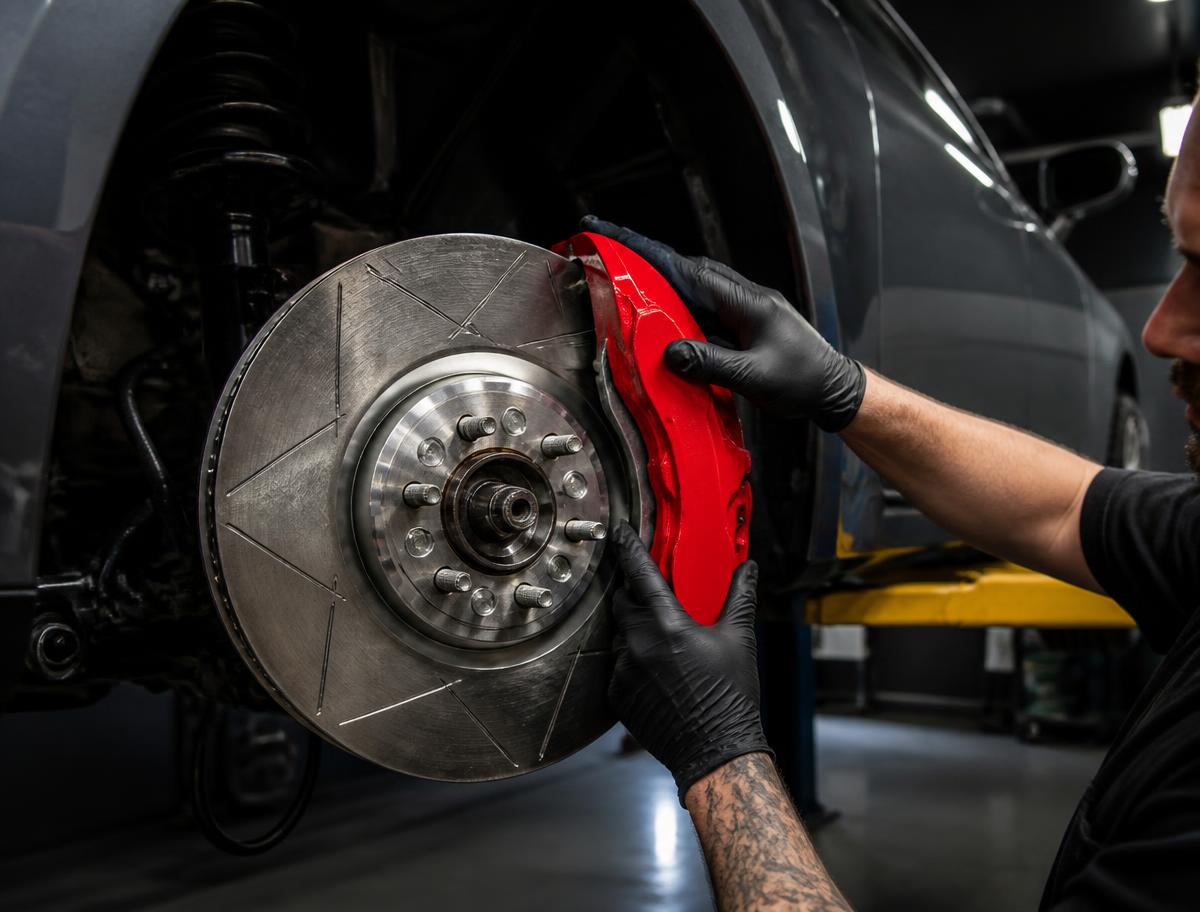
- Brake Rotors (or Discs): These are the shiny metal discs that spin with your wheels. The brake pads clamp down on the rotors to create the friction needed to slow and stop your car.
Think of it like this: the pads are like the erasers, and the rotors are the blackboard. The eraser (pad) wears down as it rubs against the blackboard (rotor).
When Do Brake Pads Need Replacing?
Brake pads are designed to wear out. It's their job. How long they last depends on your driving habits (heavy city traffic vs. highway cruising), the type of pads, and your vehicle.
Here are the signs it's time for a brake pad replacement in Philadelphia:
- Squealing or Chirping Noise: Many brake pads have a small metal tab called a "wear indicator" that starts to rub against the rotor when the pad material gets low, producing a high-pitched squeal. This is usually the first sign.
- Grinding Sound: If you hear a deep, metallic grinding sound when you brake, this is a serious warning sign. It means your pads are likely completely worn out, and the metal backing plate of the pad is grinding directly against the metal rotor. This can quickly damage your rotors and lead to much more expensive repairs.
- Reduced Braking Performance: Does your car take longer to stop? Do you have to press the pedal harder than before? Worn pads reduce the friction needed to stop effectively.
- Pulling to One Side: Uneven pad wear or a caliper issue can cause your car to pull to the left or right when braking.
- Vibrations in the Steering Wheel or Brake Pedal: While often a sign of warped rotors (which we'll discuss next), severely worn pads can also contribute to this.
- Visible Inspection: A trained technician (like those at AVOX Performance) can visually inspect your pads. Generally, if the friction material is less than 3-4mm thick, it's time for replacement.
At AVOX Performance, during your free transparent inspection, we'll actually show you the thickness of your brake pads and explain why they do or don't need replacing.
When Do Brake Rotors Need Replacing (or Resurfacing)?
Unlike pads, rotors don't *always* need replacing every time you get new pads. However, they are also subject to wear and tear.
Here's when rotors typically need attention:
- Vibrations or Pulsations: If you feel a pulsing or vibrating sensation through the brake pedal or steering wheel when braking, it's a strong indicator that your rotors are "warped" (more accurately, they have uneven thickness variations). This unevenness causes the brake pads to grab inconsistently, leading to the vibrations.
- Deep Grooves or Scratches: If you can see significant scoring, deep grooves, or discoloration (blue spots indicating overheating) on the rotor surface, they might need attention. Deep grooves reduce the effective surface area for the pads to grip.
- Minimum Thickness: Rotors have a minimum thickness specification stamped on their edge. If the rotor wears down past this point, it's unsafe and must be replaced. A thin rotor can overheat, crack, or even fail under extreme braking.
- Rust and Corrosion: While surface rust is normal after rain or a car wash and usually scrapes off with the first brake application, excessive rust can compromise rotor integrity.
- Along with Pads (Often Recommended): While not always strictly *necessary*, many shops recommend replacing rotors along with pads, especially for specific vehicle types or if the rotors are already close to their wear limits. This ensures optimal braking performance and prevents potential issues with new pads breaking in correctly on old, uneven rotors.
Resurfacing Rotors: A Cost-Saving Option?
In some cases, if rotors have minor surface imperfections or light warping and are still well above their minimum thickness, they can be "resurfaced" or "machined." This involves removing a thin layer of metal to create a smooth, flat surface again.
However, there are caveats:
- Not Always Possible: If rotors are too thin or severely damaged, resurfacing isn't an option.
- Reduces Lifespan: Resurfacing makes the rotor thinner, reducing its capacity to dissipate heat and potentially shortening its overall lifespan.
- Cost vs. Replacement: Sometimes, the cost of labor to resurface plus the time it takes can be comparable to simply replacing the rotors, especially with affordable aftermarket options.
At AVOX Performance, we'll assess your rotors carefully. If resurfacing is a viable and truly cost-effective option, we'll explain why. If replacement is the better long-term solution for safety and performance, we'll show you that too.
The AVOX Performance Difference for Your Brake Service in Northeast Philadelphia
Choosing where to get your brakes serviced is an important decision. Whether you're in Feasterville, Horsham, Jenkintown, or right here in Northeast Philadelphia, AVOX Performance offers:
- Physical Demonstration: Egor and our technicians don't just tell you what's wrong; we physically show you every fault on your vehicle. You'll see the worn pads, the grooved rotors, or whatever the issue may be.
- Fair, Upfront Quotes: No surprises. You'll receive a clear, detailed quote before any work begins.
- Mechanical Warranty: We stand behind our work with a solid warranty for your peace of mind.
- 15% Off Your First Visit: A great incentive to experience the AVOX difference.
- Free Transparent Inspection: We'll thoroughly check your braking system (and other key areas) and explain our findings without obligation.
Don't let brake noises or reduced stopping power put your safety at risk. Understanding the difference between brake pads and rotors empowers you to make informed decisions about your car's maintenance.
If you're noticing any signs of brake trouble, or it's simply been a while since your last brake check, don't wait.
Ready for an honest assessment of your brakes? Call AVOX Performance today at (609) 435-7620 to schedule your appointment and claim your 15% off first visit!
Want this checked on your car?
First-time customers save 15% and get a free transparent inspection — we show you every fault we find.