Brake Pads vs. Rotors: What Actually Needs Replacing?
You press down on the brake pedal while coming to a stop on Roosevelt Boulevard, and you hear it: an ear-splitting screech. A few days later, you start feeling a slight vibration through the steering wheel. You know it’s time to visit a mechanic, but when you look up brake services, you're faced with an age-old question: do you just need brake pads, or do you have to replace the rotors, too?
Many drivers feel cornered when a repair shop hands them an estimate that includes four new rotors and sets of pads when they were only expecting a routine service.
At AVOX Performance, we believe you should never pay for parts you don't actually need. Let's break down the difference between brake pads and rotors, how to tell what is truly worn out, and what to expect when you schedule a brake pad replacement in Philadelphia.
---
The Basics: How Pads and Rotors Work Together
Your car’s disc braking system works through hydraulic clamping force and friction. Think of it like a ten-speed bicycle brake, just much heavier and engineered to stop several thousand pounds of metal.
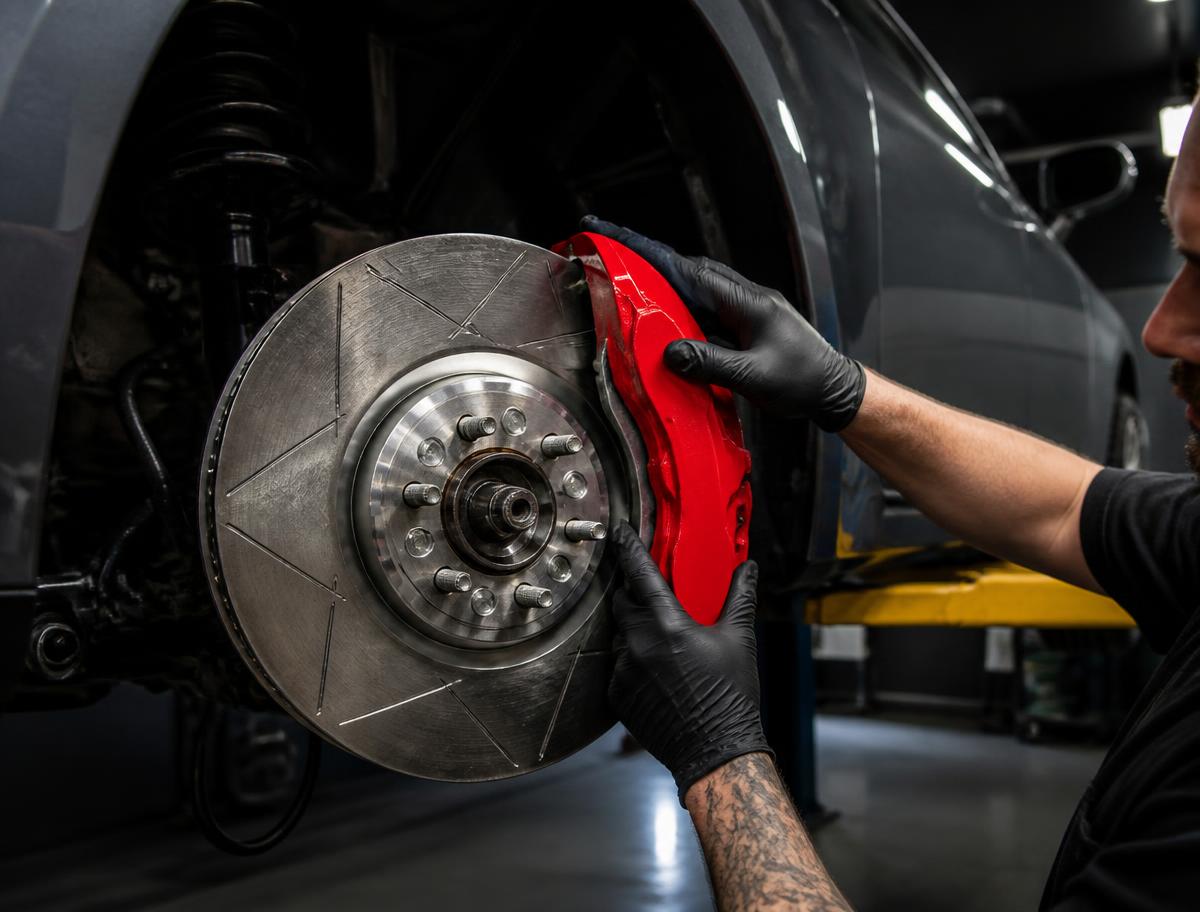
- Brake Pads: These are steel backing plates coated with a thick layer of high-friction material (ceramic, semi-metallic, or organic). They are mounted inside the brake caliper.
- Brake Rotors (Discs): These are large, smooth metal discs bolted to your vehicle's wheel hub. When your wheels spin, the rotors spin at the exact same speed.
When you step on the brake pedal, hydraulic fluid forces the caliper pistons to squeeze the brake pads tightly against both sides of the spinning rotor. That intense friction converts your vehicle’s kinetic energy into heat, bringing you to a smooth, controlled stop.
Because brake pads bear the brunt of that friction, they are deliberately designed to wear away over time—just like a pencil eraser. Rotors, being solid cast iron or composite steel, last significantly longer.
---
When Can You Replace *Just* the Brake Pads?
Replacing only the brake pads—sometimes called a "pad replacement"—is entirely safe and cost-effective under the right conditions. You generally only need new pads if:
- Your rotors exceed minimum thickness: Every rotor has a manufacturer-stamped minimum thickness (discard spec). If your rotors have plenty of metal left, they may not need to be swapped.
- The rotor surface is smooth and even: If there are no deep grooves, heat spots, or heavy rust lips along the outer edge, the rotor surface can still mate cleanly with fresh pads.
- You don’t feel pedal pulsation: If your car stops smoothly in a straight line with zero shaking in the steering wheel or pedal, your rotors are likely still flat and true.
If you catch worn pads early—while there is still 3 to 4 millimeters of friction material left—you have a much higher chance of preserving your existing rotors.
---
When Do the Brake Rotors Need Replacing, Too?
Rotors don't last forever. The intense heat cycles and friction eventually take their toll. You will need new rotors alongside your new pads if:
- You hear metal-on-metal grinding: If you waited too long and the pad friction material completely wore away, the steel backing plate will grind directly into the rotor face. This instantly gouges deep grooves into the disc, ruining it.
- Your steering wheel shakes while braking: This classic symptom indicates lateral runout or uneven pad deposits (often called "warped rotors"). Braking hard from highway speeds causes the pads to bounce over high and low spots on the uneven disc.
- The metal is worn below safety specifications: Even if a rotor looks flat, it thins out over tens of thousands of miles. A thin rotor cannot dissipate heat properly, leading to brake fade or even structural cracking.
- Rust and corrosion have compromised the surface: In Pennsylvania, road salt and winter humidity attack brake metal. If heavy corrosion pits the contact face or creates a massive rust ridge, new pads won't sit flush.
---
Why Do Some Shops Always Quote Both?
It’s common practice across many chain shops to insist on replacing pads and rotors together on every single brake job. Sometimes this is done to prevent comebacks (a fresh pad on an old rotor can occasionally squeak initially). However, too often it’s simply a tactic to inflate the repair bill.
At AVOX Performance, our philosophy is different. Egor and our team use precision digital micrometers to measure your rotor thickness right in front of you.
- If your rotors are safely above spec, flat, and in good condition, we tell you.
- If they are grooved, rusted out, or under minimum thickness, we physically point out the problem and explain why replacing them is necessary for your safety.
You receive a transparent, fair, upfront quote before any wrench touches your car. No surprise charges, and no pushy sales scripts.
---
Common Signs It’s Time for Brake Service
Don’t wait until your brake pedal hits the floor to get your car inspected. Watch out for these early warning signs:
- High-pitched squealing: Most pads have built-in metal wear indicators that make noise when the pad drops to around 2mm.
- A squishy or spongy pedal: This could signal air in your brake lines or severely worn friction components.
- The car pulls to one side: A sticking caliper or unevenly worn pads can drag your car left or right during deceleration.
- Brake dust disappearance: A sudden lack of brake dust on one wheel might mean that caliper isn’t engaging properly.
---
Book an Honest Brake Inspection in Northeast Philadelphia
Brakes are the single most important safety system on your vehicle. You deserve to know the exact condition of your pads and rotors without wondering if you're being sold parts you don't need.
Located in Northeast Philadelphia, AVOX Performance proudly serves drivers from Willow Grove, Feasterville, Horsham, and Jenkintown. We back our quality mechanical work with an ironclad warranty, and we run our shop strictly by appointment so your car gets our undivided attention.
First time visiting us? Enjoy 15% off your first visit plus a free transparent visual brake inspection. We’ll lift your vehicle, measure your pads and rotors, and show you exactly what we find.
Call Egor at (609) 435-7620 today or reach out online to schedule your appointment!
Want this checked on your car?
First-time customers save 15% and get a free transparent inspection — we show you every fault we find.