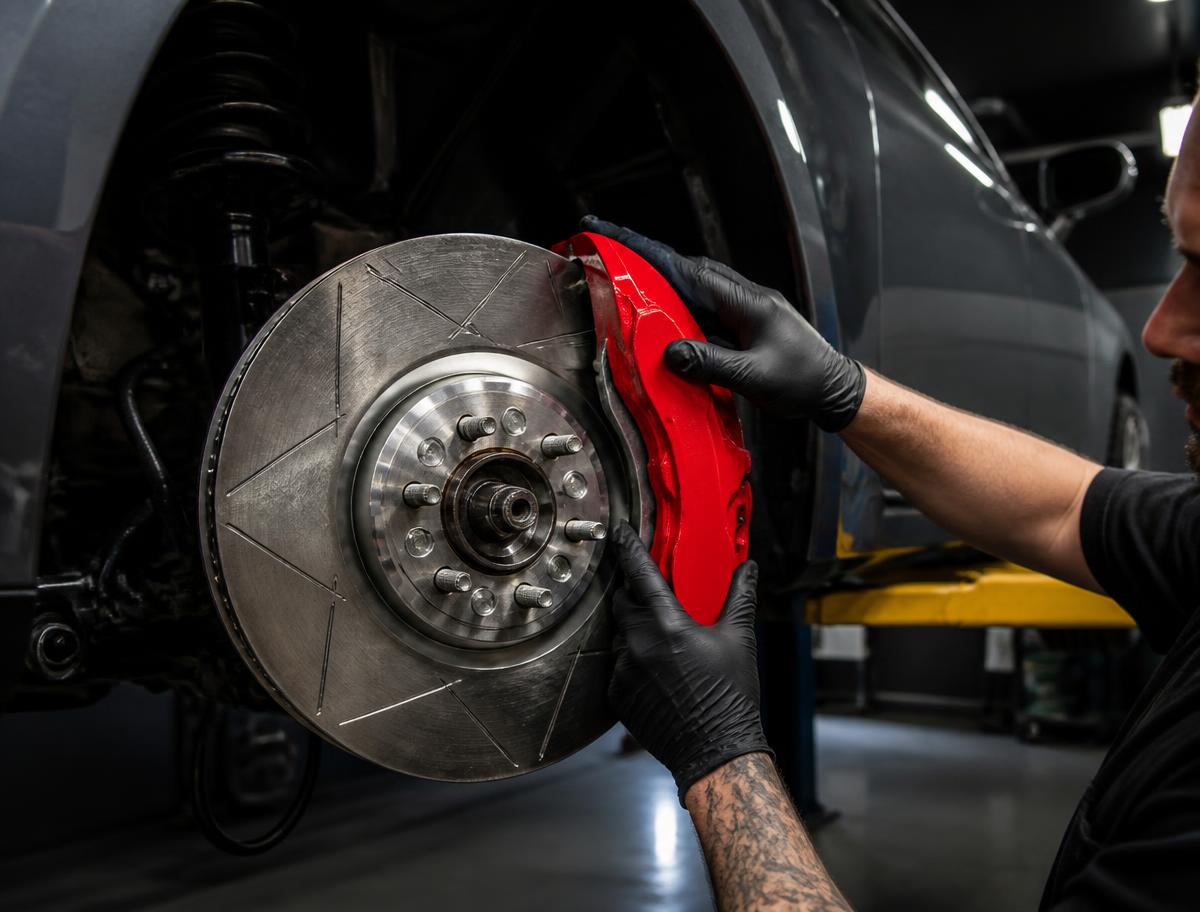
7 Urgent Warning Signs Your Brakes Need Service Right Now in Northeast Philadelphia
Your car’s brakes are, without a doubt, its most crucial safety feature. When they’re working properly, they provide the peace of mind you need every time you hit the road. But when they start to falter, it can quickly become a serious safety concern for you, your passengers, and everyone else on the road. Ignoring the warning signs of failing brakes is a gamble you simply can't afford to take.
At AVOX Performance, serving Northeast Philadelphia, Willow Grove, Feasterville, Horsham, and Jenkintown, we believe in proactive maintenance and transparent service. We want you to be informed about your vehicle's health, especially when it comes to something as vital as your brakes. As Egor, the owner, I'm committed to showing you exactly what's happening with your car.
Here are seven critical warning signs that indicate your brakes need professional attention right away.
1. Squealing, Squeaking, or Grinding Noises
This is perhaps the most common and often the first warning sign drivers notice.
- Squealing/Squeaking: Often indicates worn brake pads. Many modern brake pads are designed with a small metal indicator that squeals loudly when the pads are worn down to a certain point. It's a built-in alarm telling you it's time for a replacement.
- Grinding: This is a much more serious sound, often meaning that your brake pads are completely worn through, and the metal backing of the pad is grinding directly against the metal brake rotor. This not only significantly reduces braking power but also causes rapid and expensive damage to your rotors. If you hear grinding, get your vehicle to a reputable shop for brake repair in Northeast Philadelphia immediately.
2. A Soft or Spongy Brake Pedal
When you press your brake pedal, it should feel firm and responsive. If it feels soft, mushy, or goes almost all the way to the floor before engaging, you have a problem that requires immediate attention.
This could be due to:
- Air in the brake lines: Air can compress, unlike brake fluid, leading to a spongy feel.
- Low brake fluid: Leaks in the system can cause fluid levels to drop.
- Failing master cylinder: This critical component pushes brake fluid through the lines. A failing one can't generate enough pressure.
- Worn brake lines or calipers: Leaks can occur here, reducing pressure.
A soft pedal means reduced stopping power and could lead to complete brake failure. Don't delay.
3. Pulling to One Side When Braking
If your vehicle consistently pulls to the left or right when you apply the brakes, it's a clear indication that there's an unevenness in your braking system. This can be extremely dangerous as it affects your ability to control the vehicle, especially in an emergency stop.
Possible causes include:
- Stuck caliper: One brake caliper might not be releasing properly, causing one wheel to drag.
- Contaminated brake pads: Oil or grease on a brake pad can reduce its friction on one side.
- Worn brake hose: A collapsed hose can restrict fluid flow to one side.
- Unevenly worn brake pads or rotors: One side might be doing more work than the other.
This isn't just an annoyance; it's a safety hazard that needs professional diagnosis and brake repair in Northeast Philadelphia.
4. Vibrations or Pulsations in the Brake Pedal or Steering Wheel
Do you feel a shaking or pulsing sensation in your brake pedal, or even through the steering wheel, when you apply the brakes? This is a classic symptom of warped brake rotors.
Brake rotors are the discs that your brake pads clamp down on. Over time, due to heat and wear, these rotors can become uneven. When the pads clamp onto a warped surface, it creates that vibrating or pulsating sensation. While not immediately catastrophic, warped rotors significantly reduce braking efficiency and can lead to longer stopping distances.
5. A Burning Smell When Braking
If you detect a distinct chemical or burning smell after braking, especially after heavy use (like going down a long hill), it could signify overheating brakes. This is often due to:
- Overworked brakes: Continuously heavy braking can cause pads and fluid to overheat.
- Sticking caliper: A caliper that doesn't fully release will cause continuous friction and heat.
- Worn out brake pads: Extremely thin pads generate more heat.
Overheated brakes, also known as "brake fade," lose their ability to stop the car effectively. If you smell this, let your brakes cool down, and then get them inspected as soon as possible.
6. Illuminated Brake Warning Light on Your Dashboard
This one might seem obvious, but it's surprising how many drivers ignore dashboard warning lights. Your car's brake warning light (it often looks like an exclamation mark in a circle, or the word "BRAKE") is there for a reason.
It can indicate:
- Low brake fluid level: This is the most common reason.
- A problem with the anti-lock braking system (ABS): If your ABS light is on.
- A parking brake engaged: Make sure your parking brake is fully disengaged.
- Other sensor issues: Modern cars have sensors that monitor various aspects of the braking system.
Never ignore a brake warning light. It's your car's way of telling you that a critical safety system has an issue.
7. Longer Stopping Distances
This is a subtle but extremely dangerous warning sign. If you notice that your car isn't stopping as quickly or efficiently as it used to, and you need to press the pedal harder or further to achieve the same braking effect, your brakes are degrading.
This can be caused by:
- Worn brake pads: Less material means less friction.
- Worn brake rotors: Reduced surface area for the pads to grip.
- Air or moisture in the brake lines: Compromises hydraulic pressure.
- Contaminated brake fluid: Old fluid can absorb moisture and lose effectiveness.
If your stopping distances are increasing, your reaction time and safety margin are decreasing. This is an urgent issue that needs immediate attention.
Why Choose AVOX Performance for Your Brake Repair in Northeast Philadelphia?
At AVOX Performance, we understand the importance of reliable brakes. As Egor, the owner, I'm dedicated to providing honest, transparent, and top-quality brake repair in Northeast Philadelphia and the surrounding communities.
- We Physically Show You Every Fault: We don't just tell you what's wrong; we show you. You'll see the worn pads, the warped rotors, or the leaking caliper with your own eyes.
- Fair, Upfront Quotes: No hidden fees or surprises. You'll know the cost before any work begins.
- Mechanical Warranty: We stand behind our work, giving you peace of mind long after you leave our shop.
- 15% Off Your First Visit + Free Transparent Inspection: Experience our commitment to excellent service with a special offer for new customers.
Don't wait for a small brake issue to become a major safety hazard. If you've noticed any of these seven warning signs, your vehicle needs professional attention.
Ready to ensure your safety on the road? Call AVOX Performance today at (609) 435-7620 to schedule your brake inspection and service!
Want this checked on your car?
First-time customers save 15% and get a free transparent inspection — we show you every fault we find.